
Film
Anti-static film and bags for static-sensitive parts
Anti-static polythene film and bags are made with an additive that limits how much static charge the packaging itself builds up as parts are put in, handled and taken out, which helps protect electronic components and other static-sensitive items. We manufacture anti-static film and bags at our Blackburn factory in gauges from 50 to 150 microns, in your sizes, plain or printed.

At a glance
Key points
- An anti-static additive limits the charge the film builds up as it is handled
- Extruded in gauges from 50 to 150 microns
- Bags, liners, cut sheets and film on the reel, sized to your parts
- Anti-static is not the same as a metallised shielding bag; tell us what your parts need
- Printed to your artwork for part numbers, handling instructions and warnings
| Gauge | 50–150mu |
|---|---|
| Material | Polythene with an anti-static additive, extruded in house at our Blackburn factory |
| Sizes | Made to order to suit your parts, flat or gusseted |
| Colour and print | Commonly tinted so anti-static stock is easy to identify, other colours to order; printed to your artwork |
| Supplied as | Pre-made bags, liners and cut sheets, or film and tubing on the reel |
| Minimum order | Varies by product and gauge; we support one-off bespoke trials |
| Lead time | Typically 2 to 3 weeks on bespoke runs, quicker on repeat orders and standard specifications |
What do anti-static polythene bags actually do?
Anti-static polythene contains an additive that limits how much static charge the film builds up when it is rubbed, opened, filled or emptied. Ordinary polythene generates static very readily, and that charge can discharge into a component or pull dust and swarf onto a part that has just been cleaned.
Anti-static film reduces that risk from the packaging itself, so bagging a circuit board, a connector or a sensor is far less likely to be the thing that damages it. It is a common choice for storing and moving electronic assemblies, spares and sensitive mechanical parts around a factory, a stores or a carrier network. It is one part of static control rather than the whole of it, so it sits alongside whatever handling procedures your parts already need.
Is anti-static the same as ESD shielding?
No, and it is worth being clear on the difference before you order. Anti-static film limits the charge the packaging generates of its own accord, which reduces the static the contents are exposed to through handling. A metallised shielding bag does a different job: it forms a conductive barrier against electrostatic fields outside the pack.
Plenty of parts only need anti-static film, particularly where the concern is handling, dust attraction and general storage. If your components are specified as needing shielding, or a customer's packing standard calls for it, say so when you enquire and we will talk it through rather than sell you the wrong thing.
What gauge and size of anti-static bag do I need?
Gauge is chosen for physical protection rather than for the anti-static effect, because the anti-static property comes from the additive in the film and not from its thickness. We extrude anti-static film from 50 to 150 microns. Lighter gauges suit small components, cable assemblies and boards that are handled gently, while heavier gauges suit larger assemblies, sharper edges and parts that move around in transit.
For size, measure the part at its widest and deepest point, allow enough width to get it in and out without dragging it against the film, and allow enough length to fold or seal the top. Sizes are made to order, so you are not limited to a standard size chart.
How are anti-static film and bags supplied?
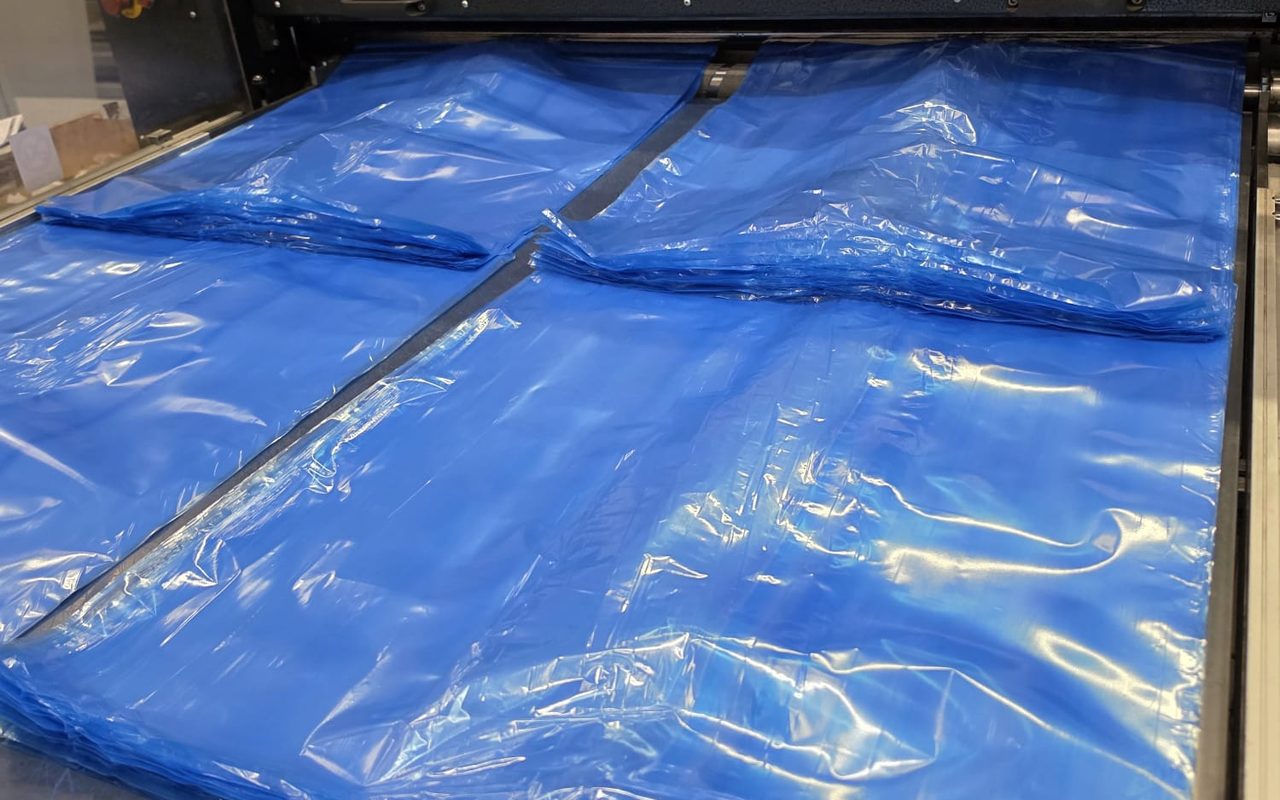
Anti-static polythene is supplied as pre-made bags, as liners and cut sheets, or as film on the reel for lines that make their own bags. It is commonly made in a tinted film so anti-static stock is easy to tell apart from ordinary polythene on the shelf, which stops the wrong bag being picked at the bench, and other colours are made to order.
We print to your artwork where you need part numbers, handling instructions or a warning on the face of the bag. Extrusion and conversion both happen at our Blackburn factory, so the film, the size and the print all sit under one specification and repeat orders match.
Common applications for anti-static film and bags
- Electronics manufacture and assembly
- Printed circuit board and component storage
- Electrical wholesale and distribution
- Automotive electronics and vehicle control units
- Aerospace and defence electronic assemblies
- Control panels, switchgear and instrumentation
- IT hardware, servers and refurbishment
- Service and spare parts held in stores
Questions
Anti-static film and bags FAQs
What is the difference between an anti-static bag and a metallised shielding bag?
An anti-static bag limits the static charge the packaging builds up when it is handled, so the pack itself is far less likely to be the source of a discharge. A metallised shielding bag forms a conductive barrier that also protects the contents from electrostatic fields outside the bag. Anti-static film covers many storage and handling situations; if a component specification or a customer's packing standard calls for shielding, that is a different product and worth flagging when you enquire.
Does the anti-static property last forever?
Anti-static additives are not permanent in the way a colour is. Their effect commonly depends on the humidity around the pack and can reduce over a long period in storage or in very dry conditions. If your parts sit in stock for months, or the stores area is heated and dry, tell us when you enquire and we will take it into account in the specification.
Do anti-static bags protect against physical damage as well as static?
They protect as well as any polythene bag of the same thickness, which means they keep dust, moisture and handling marks off a part, but they are not padding. The anti-static property comes from an additive rather than from the gauge, so choose the thickness for physical protection in the normal way. For heavy, sharp or awkward parts, move up a gauge or pair the bag with a rigid outer.
Can you supply anti-static film on the reel for a bagging machine?
Yes. As well as pre-made bags we supply anti-static film and layflat tubing on the reel, so a line can cut and seal its own bags. If it is running on a form-fill-seal or bagging machine, send us the web width, the core size and the maximum reel diameter the machine takes and we will make the reels to suit it.
Related
You might also consider
Polythene bags
Clear or coloured bags, flat, gusseted or on a roll, printed or plain and sized to your product.
View product
Co-extruded bags and film
Multi-layer co-extruded film and bags that combine strength, barrier and finish in one web.
View product
Bespoke specification
A completely custom film or bag engineered around your product, process and requirements.
View productBrowse the full product range, try the product selector, or read our packaging guides.
Need it made to your exact spec?
We manufacture tailor-made polythene packaging in Blackburn and deliver across the UK. Tell us your numbers and we will quote.