
Film
Co-extruded bags and film, multi-layer and made to order
Co-extruded film is made by extruding two or more layers of polythene together into one web, so each layer can do a different job: strength on one side, opacity or slip on the other. We co-extrude at our Blackburn factory in gauges from 30 to 200 microns and convert the film into bags in house.
At a glance
Key points
- Two or more layers extruded together into a single web
- Different properties inside and out, such as an opaque black inner behind a printable coloured outer
- Extruded in gauges from 30 to 200 microns
- Layer structure can carry the same performance at a lower overall gauge, which cuts material use
- Recycled grades available across much of the range, and biodegradable options are manufactured too
| Gauge | 30–200mu |
|---|---|
| Material | Multi-layer polythene, co-extruded in house at our Blackburn factory |
| Layer structure | Built around what each side of the film has to do, including opaque and two-tone constructions |
| Sizes and widths | Made to order |
| Colour and print | Made to order, including a different colour inside and out; plain or printed to your artwork |
| Supplied as | Reels of film, layflat tubing, or converted into bags, covers and liners |
| Lead time | Typically 2 to 3 weeks on bespoke runs, quicker on repeat orders and standard specifications |
What is co-extruded film?
Co-extruded film is polythene extruded as two or more layers at the same time, bonded together in the melt so they leave the line as a single web. Each layer is given a job. One might carry the strength, another the opacity, another a printable or a low-slip surface, and the inner layer is often chosen for how cleanly it seals.
Because the layers are formed together rather than stuck together afterwards, there is no adhesive involved and the layers do not separate in normal use. We co-extrude at our factory in Blackburn in gauges from 30 to 200 microns and convert the film into finished bags on the same site.
What can a co-extruded film do that a single-layer film cannot?
A single-layer film has to be one compromise: the same material, colour and surface on both faces. Co-extrusion lets you ask for opposite things at once. A despatch bag can be grey and printable on the outside and black on the inside so nothing shows through. An industrial liner can have a tough outer layer and a softer inner that seals at a lower temperature. A film that slides over a product can be slippery on one face and grippy on the other so a stack does not shift.
It also lets you get the performance you need from less material overall, because the strength sits in the layer that is doing the work instead of being spread evenly through one thicker layer.
How do you specify a co-extruded film?
With a co-extruded film, start with what each side of the film has to do rather than with a thickness. Tell us what goes in the pack, how it is filled and sealed, what has to be hidden or visible, what has to be printed, and how the pack is handled and stored. From there we set the layer structure, the overall gauge, the colours and the surface properties.
Strength, elasticity, slip, stiffness, thickness and recycled content are all tuned in the specification. We extrude from 30 to 200 microns, make sizes, widths and colours to order, and print to your artwork. Because the extrusion and the conversion both happen in house at Blackburn, the film and the finished bag sit under the same specification, which is what makes repeat orders match.
How are co-extruded bags and film supplied?
Co-extruded material is supplied as film on the reel, as layflat tubing, or converted into finished bags, covers and liners at our Blackburn factory. Reel widths, core sizes and put-ups are made to order, so if the film feeds a machine, send us the web width and the maximum reel diameter it takes. Finished bags can be flat, gusseted, supplied on a roll or made with a peel-and-seal strip, depending on how they are packed.
Recycled grades are available across much of the range and biodegradable options are manufactured too. Recycled content also affects Plastic Packaging Tax, which is charged on packaging that does not meet the recycled content threshold; the current rate and threshold are published on gov.uk.
Common applications for co-extruded bags and film
- E-commerce and mail order despatch bags
- Opaque bags for confidential documents and returns
- Refuse and waste sacks that need an opaque outer
- Box, case and drum liners for industrial use
- Agriculture and horticulture film
- Construction and building product wrapping
- Automotive and engineering parts protection
- Print and paper finishing
Questions
Co-extruded bags and film FAQs
What is the difference between co-extruded film and laminated film?
Co-extruded film is made by extruding the layers together in one pass, so they bond in the melt and come off the line as a single web. Laminated film is made by bonding two or more finished films together afterwards, usually with an adhesive. For polythene packaging, co-extrusion is generally the more direct route because there is no adhesive involved and the layers do not delaminate in normal use.
Why are mailing bags usually co-extruded?
A mailing bag has to do two opposite things: look presentable and take print on the outside, and stop anyone seeing what is inside. Co-extrusion handles both by putting a printable coloured layer on the outside and an opaque dark layer on the inside, without needing a heavy gauge just to get the opacity. It also lets the film carry the strength needed to survive a carrier network.
Can a co-extruded film be a different colour on each side?
Yes. A different colour inside and out is one of the most common reasons buyers choose co-extrusion, typically a white, grey or coloured outer with a black inner for opacity. Colours are made to order, so tell us what you want on each face and where the print has to sit, and we will build it into the specification.
Does co-extrusion let me use a thinner film?
Often, yes. Because each layer does a specific job, the strength and the opacity sit where they are needed instead of being spread evenly through one thicker layer, so the same performance can come from less material. How far you can go depends on the product, the handling and the seal, so trial it before you change a live specification. Send us your current gauge and what goes in the bag and we will say where there is room.
Related
You might also consider
Mailing bags
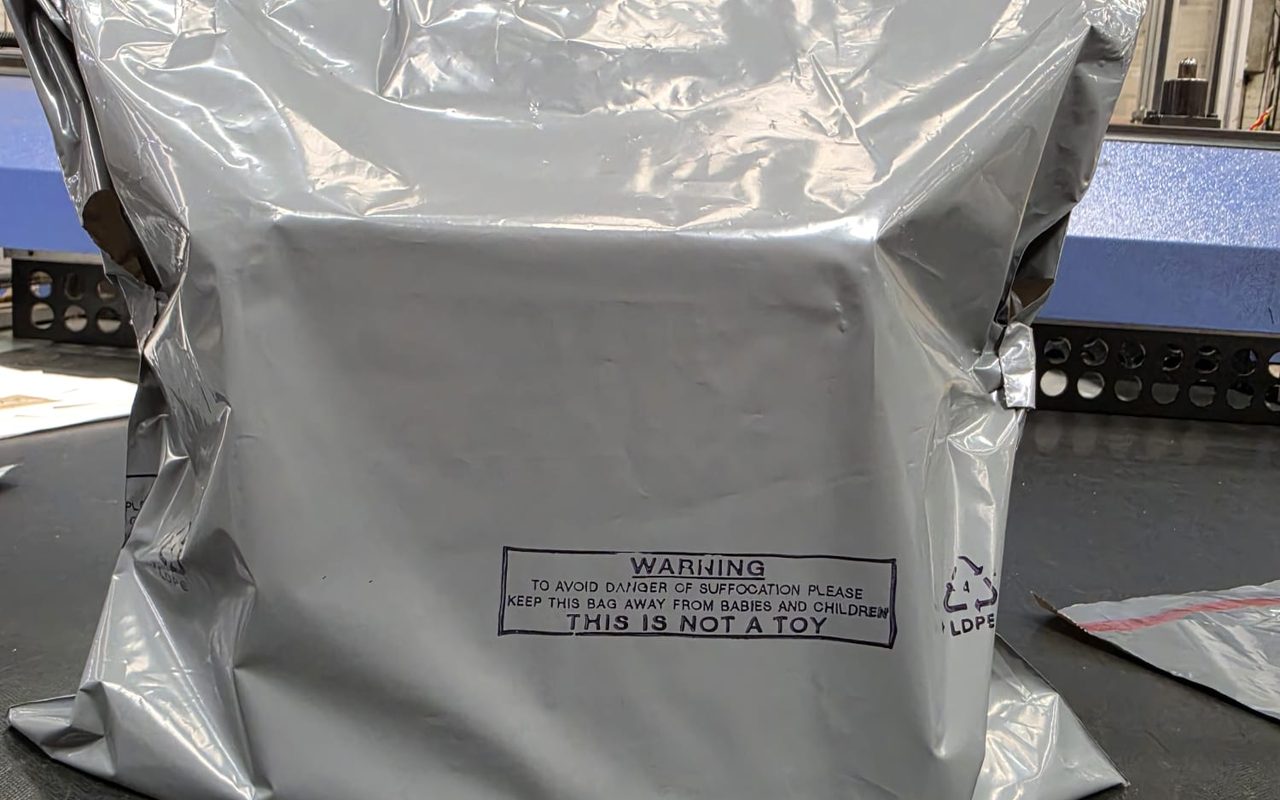
Opaque, tamper-evident despatch bags with a permanent peel-and-seal strip, in recycled grades.
View product
EVA film
Soft, flexible EVA film with excellent clarity and stretch for specialist wrapping and liners.
View product
Bespoke specification
A completely custom film or bag engineered around your product, process and requirements.
View productBrowse the full product range, try the product selector, or read our packaging guides.
Need it made to your exact spec?
We manufacture tailor-made polythene packaging in Blackburn and deliver across the UK. Tell us your numbers and we will quote.