
Guide
Shrink film, stretch film and pallet covers compared
Stretch film secures a pallet by tension, shrink film secures it with heat, and a pallet cover secures nothing but keeps dust and weather off the load. Stretch wrap suits fast indoor despatch, shrink film suits rigid or outdoor loads, and covers go over either where contamination is the risk you are managing.
- Stretch film is applied cold and holds a load by elastic tension. No heat is involved.
- Shrink film is applied loose as a hood, then heated so it contracts into a rigid, water-shedding skin.
- A pallet cover keeps dust and weather off but adds no stability, so most operations wrap or strap first.
- Stretch wrapping needs a hand dispenser or a wrapping machine. Shrinking a pallet needs a gas or electric shrink gun, or an automatic shrink frame.
- Stretch film generally uses the least polythene per pallet. A heavy shrink hood uses the most.
- We manufacture shrink film and pallet covers in Blackburn. Stretch film is not part of our range.
What is the difference between shrink film, stretch film and pallet covers?
Stretch film, shrink film and pallet covers all put polythene around a pallet, but only two of them hold a load together. Stretch film is wrapped around the load cold and grips because it is elastic, always trying to pull back to its original length. Shrink film goes on slack, usually as a gusseted hood dropped over the load, then contracts and sets hard when heat is applied. A pallet cover is a gusseted bag that drops over the top and down the sides, and grips nothing.
The split is stability against protection. Stretch and shrink film both stabilise, so cases stay put when a forklift lifts the pallet or a curtainsider corners. A pallet cover protects, keeping dust, damp and dirt off goods standing in a yard, on a loading bay or in an unheated warehouse.
We manufacture shrink film and pallet covers at Griffin Mill in Blackburn, and stretch film is not part of our range. That is worth knowing as you read, and it is why we will say plainly when stretch wrapping is the right answer for your loads.
How does stretch film work, and what equipment do you need?
Stretch film is elastic polythene pulled around a pallet cold, holding the load by tension and cling rather than by heat. Most of it is linear low density polyethylene, made either by the cast route, which unwinds quietly and looks clear, or the blown route, which is tougher and more puncture resistant but noisier and hazier.
At its simplest the equipment is a hand dispenser and an operator walking round the pallet, using light gauge rolls commonly 400mm or 500mm wide. Volume operations move to a turntable, rotary arm or ring wrapper fed by long machine rolls. Machines with powered pre-stretch draw the film between two rollers before it reaches the load, so a metre off the roll covers several metres of pallet and each load takes less material.
Stretch wrapping is more about pattern than gauge. Locking wraps at the base tie the load to the pallet deck, a consistent overlap keeps the tension even up the load, and reinforcement at the top stops the upper layers walking. Heavy film applied badly holds worse than light film applied properly.
How does shrink film work on a pallet load, and what equipment do you need?
Shrink film holds a pallet with heat. The film is stretched as it is manufactured and keeps that tension until heat releases it, so a hood dropped loosely over a load pulls in tight as soon as heat reaches it. On pallets the usual format is a heavy gusseted hood. On multipacks, film is wrapped and run through a heat tunnel instead.
The equipment is a heat source. Hand operations mostly use a gas-fired shrink gun on an LPG cylinder, because it puts out enough heat to shrink a full pallet hood quickly. Electric guns suit lighter work, and higher-volume sites use an automatic shrink frame that heats all four sides at once. All of them need a trained operator and careful handling of a naked flame near packaging.
What you get in return is a rigid, sealed unit. The film shrinks down over the corners and can be taken under the pallet feet, so water runs off rather than tracking between layers, dust stays out, and a load of bricks, timber or drums behaves as one block. A shrunk hood also shows tampering, because it cannot be opened and put back.
When is a pallet cover the right choice?
A pallet cover is the right choice where the load is already stable and the risk you are managing is contamination rather than collapse. It is a gusseted polythene bag, open at the bottom, that drops over a loaded pallet and hangs down the sides, keeping rain, dust, dirt and condensation off goods standing in a yard, in an unheated store or on a curtainsider.
A cover stabilises nothing. If a load leans or sheds cases without help, wrap or strap it first, then put the cover over the top. Covers work well on loads that are already banded, strapped or in a stillage, where the only job left is keeping the goods clean.
Three measurements specify a cover: the layflat width across the pallet, the gusset that opens out to cover the depth, and the drop down the sides from the top of the load. The drop is the figure most people get wrong, because load heights vary far more than pallet footprints. We manufacture covers from 75 to 200 micron in clear, black or a colour you specify, so the gauge can match how long pallets stand and how exposed they are.
Which option costs least to run?
Stretch film almost always puts the least polythene on a pallet, a heavy shrink hood puts on the most, and a pallet cover adds material on top of whichever method you use. Film weight per pallet is the fairest basis for comparison, because it drives both what you pay and what you handle as waste at the far end. Roll price alone tells you little.
Material is not the whole cost. Wrapping machines are a capital purchase with servicing and spares behind them, and hand wrapping is slow and hard on operators. Shrinking adds energy for every pallet, plus the gun, cylinder handling and training that come with a naked flame. Pallet covers need no equipment at all, so the cost is the film and a few seconds of labour.
Then there is the cost of getting it wrong. One collapsed pallet, one rejected delivery or one water-damaged load usually wipes out the material saving that caused it. UK Plastic Packaging Tax also applies to plastic packaging that does not contain enough recycled content, so recycled grades change the arithmetic. Check gov.uk for the current rate and threshold.
Which one should you use for your type of load?
Match the method to the load and the journey, not to what happens to be in the warehouse. Uniform cases, indoor storage and steady throughput point to stretch wrapping, because it is quick, uses little material and a machine repeats it exactly. Awkward, heavy or sharp-edged loads that need to behave as one solid unit point to shrink film: bricks, blocks, timber, drums and anything stacked without interlocking.
Exposure decides much of the rest. Loads that stand outside, travel on a curtainsided vehicle or sit in a yard through a wet week are better shrunk or covered, because stretch wrap lets water track between the layers and into the load. Heat-sensitive goods point the other way: chocolate, some cosmetics, aerosols and anything with a low melting point should not go near a shrink gun.
Loads that are already strapped or banded frequently need nothing more than a cover. Loads that go through several handovers, into containers or into third-party storage often justify both a wrap and a cover, because you cannot control how they are treated once they leave you. Our product selector tool will narrow the choice down if you would rather answer a few questions.
Can you use shrink film, stretch film and a pallet cover together?
Yes, and combining two of them is normal practice. The common pairing is stretch wrap for stability with a gusseted pallet cover over the top for weather and dust, which gives a stable load and a clean outer skin without heating anything. Shrink film is usually used on its own, because a properly shrunk hood already does both jobs at once.
Combining costs more material, so be deliberate. Ask what each layer is for. If the cover exists because stretch wrap was letting water in at the top, a top sheet under the wrap may be enough. If the wrap exists because a covered load was leaning, better load build or strapping may deal with the cause instead.
It is worth measuring before changing anything. Our pallet shrink-wrap calculator estimates how much film a given pallet size, load height and wrap pattern uses, which turns a wrapping argument into numbers you can compare. Send us the load details, the journey and the equipment you run, and we will specify the film against them.
| Point of comparison | Stretch film | Shrink film (pallet hood) | Pallet cover |
|---|---|---|---|
| How it holds | Stretched cold, holds by elastic tension and cling | Applied loose, then shrunk tight with heat | Drops over the load and holds nothing |
| What it is for | Load stability | Load stability plus weather and dust protection | Weather, dust and dirt protection only |
| Equipment needed | Hand dispenser, or a turntable, rotary arm or ring wrapper | Gas or electric shrink gun, or an automatic shrink frame | None |
| Energy at the point of use | None beyond the wrapping machine | Heat for every pallet | None |
| Film weight per pallet | Lowest, especially with powered pre-stretch | Highest of the three | Added on top of whichever wrap you use |
| Weather resistance | Limited. Water can track between the layers | Good. Film seals over the corners and sheds water | Good over the top and sides, open at the base |
| Best suited to | Uniform cases, indoor storage, high throughput | Bricks, blocks, timber, drums, outdoor and export loads | Stable or strapped loads that only need to stay clean |
| Main drawback | Little protection from water, and tension is easy to get wrong | Naked flame, energy use, and slower when done by hand | No load stability at all |
| Made by More Polythene | No | Yes, extruded in Blackburn | Yes, made to your pallet size |
Frequently asked questions
Is shrink wrap stronger than stretch wrap?
It is not stronger, it is different. Shrink film sets into a rigid skin that makes a pallet behave as one block, which suits sharp, heavy or uneven loads and sheds water. Stretch film holds by continuous tension, which suits uniform cases and is faster to apply and easier to repair. The useful question is whether your load needs rigidity or tension.
Do you need a heat gun to shrink wrap a pallet?
You need a heat source, and on pallets that is usually a gas-fired shrink gun running off an LPG cylinder. Electric guns handle lighter work, and automatic shrink frames heat all four sides at once on higher volumes. Every option needs a trained operator and sensible handling near flammable goods, so shrinking is rarely the right method if you cannot supervise it properly.
Can a pallet cover replace stretch wrapping?
Only if the load is already stable. A pallet cover keeps dust, damp and dirt off the goods, but it does not grip the cases or tie them to the pallet, so it will not stop a stack shifting in transit. Loads that are strapped, banded or naturally stable often need nothing more than a cover, and everything else needs wrapping or shrinking as well.
Which uses the least plastic per pallet?
Stretch film usually uses the least polythene per pallet, particularly on a machine with powered pre-stretch, and a heavy shrink hood uses the most. Recycled content matters alongside weight, because UK Plastic Packaging Tax applies to plastic packaging that does not contain enough recycled material. Check gov.uk for the current rate and threshold, then compare options on film weight per pallet and recycled content rather than on roll price.
Does More Polythene manufacture stretch film?
No. We manufacture shrink film and pallet covers, along with sheeting, layflat tubing and a wide range of polythene bags, at our factory in Blackburn. If stretch wrapping is the right method for your loads we will say so rather than push you towards a film we happen to make. Call 01254 691354 or email sales@morepolythene.co.uk for an opinion on your loads.
Products
Products covered in this guide
Shrink film
Stable, tight pallet and multipack loads with consistent shrink across the wrap.
View productPallet covers
Gusseted top covers that shield palletised loads from dust, damp and the elements.
View productPolythene sheeting
Protective covers, liners and dust sheets for storage, building and transit, at any width.
View productKeep reading
Related guides
How to use less packaging film without losing protection
A practical guide to taking material and cost out of polythene packaging, covering gauge, polymer blend and bag size, and the points where thinner film is a false economy.
Read the guidePolythene thickness explained: micron, gauge and mil
What micron, gauge, mil and millimetres actually mean on a polythene specification, how to convert between them, and how to choose a thickness for the job.
Read the guide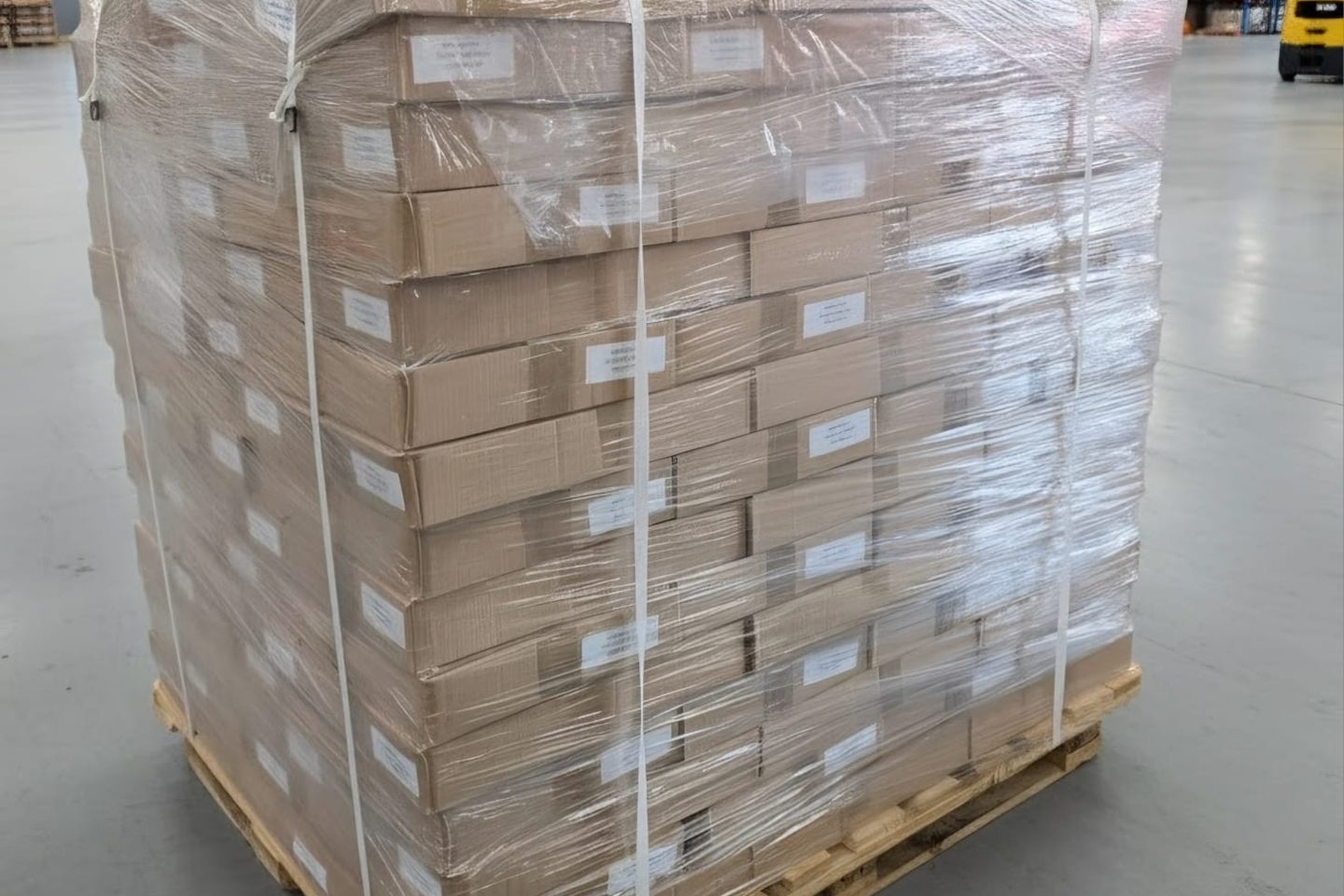
Need it made to your exact spec?
We manufacture tailor-made polythene packaging in Blackburn and deliver across the UK. Tell us your numbers and we will quote.